

In the ever-evolving world of fitness supplements, creatine has long held its ground as a powerhouse ingredient, celebrated for boosting strength and enhancing performance. But as the market expands, a new contender has emerged: creatine blends, promising a cocktail of compounds designed to maximize results. This divergence leaves many fitness enthusiasts at a crossroads—should they stick with the tried-and-true monohydrate, or venture into the realm of blends? In this article, we’ll unravel the mystery behind these options, weighing their benefits and drawbacks to help you decide if the blend truly lives up to the hype.
Understanding the Basics of Creatine Monohydrate and Blends
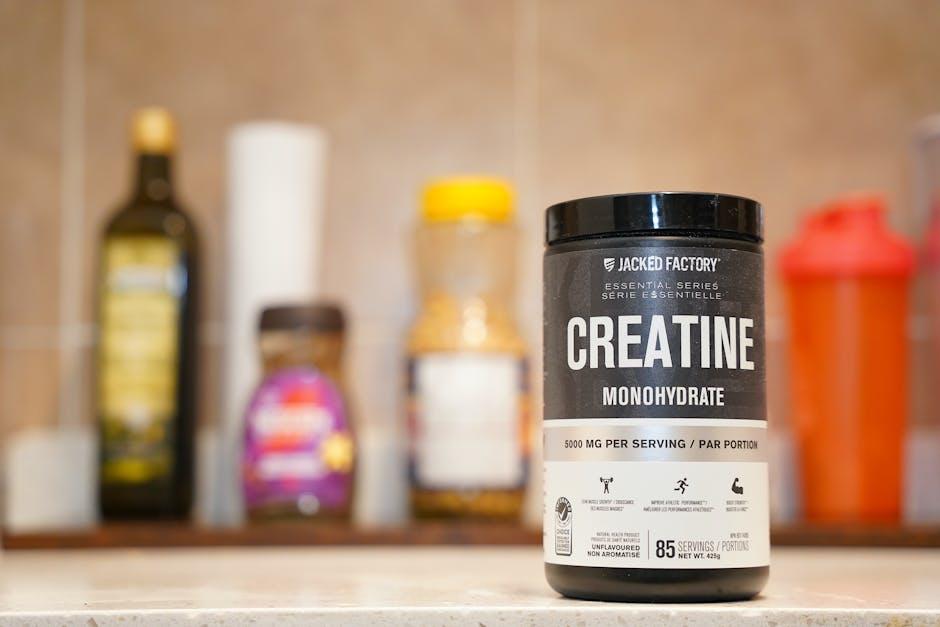
Creatine monohydrate stands as the cornerstone of muscle-building supplements due to its simplicity, purity, and proven track record. It consists purely of creatine molecules bound with water, making it highly effective for increasing phosphocreatine stores in muscles, which boosts ATP production and fuels quick bursts of energy. Its straightforward composition is favored by many athletes and fitness enthusiasts because it is well-researched, cost-effective, and delivers consistent results without unnecessary additives.
On the other hand, creatine blends combine various forms of creatine, such as creatine ethyl ester, buffered creatine, or micronized creatine, aiming to enhance absorption rates or reduce common side effects like bloating. These blends often promise faster uptake and personalized benefits, but their effectiveness compared to pure monohydrate can vary. Factors to consider include:
- Potential for varied absorption dynamics
- Inclusion of additional ingredients targeting endurance or recovery
- Higher cost relative to monohydrate
- Possible redundancy if one form is already sufficient
| Aspect | Creatine Monohydrate | Creatine Blend |
|---|---|---|
| Cost | Low | Moderate to High |
| Purity | High | Varies |
| Absorption Speed | Standard | Potentially Faster |
| Side Effects | Minimal (Possible bloating) | Reduced (Depends on formula) |

Comparing Effectiveness and Absorption Rates in Different Formulas
When dissecting the performance of pure creatine monohydrate versus various blends, absorption speed often becomes the buzzword. Creatine monohydrate is renowned for its high bioavailability, efficiently saturating muscle cells with minimal fuss. Its simplicity allows the body to absorb and utilize it steadily over time, which is why many athletes trust it for consistent results. On the flip side, blends often incorporate multiple creatine forms and additional compounds aimed at accelerating uptake or enhancing endurance. However, this complexity doesn’t always guarantee superior absorption. In fact, some studies suggest that the body’s creatine transport mechanisms can get overwhelmed or less efficient when bombarded with multiple forms simultaneously.
Looking beyond absorption, the real question becomes whether these blends deliver noticeably better results in performance or recovery. While a few formulations tout benefits like improved water retention or reduced bloating, pure monohydrate remains the gold standard due to its proven effectiveness and cost-efficiency. Consider the following quick comparison:
| Aspect | Creatine Monohydrate | Creatine Blends |
|---|---|---|
| Absorption Rate | Steady, reliable uptake | Faster but variable |
| Effectiveness | Clinically proven enhanced muscle power | Mixed results, often anecdotal |
| Cost | Affordable | Premium-priced |
| Digestive Tolerance | Generally well-tolerated | Sometimes causes discomfort |
- Monohydrate excels in straightforward, evidence-backed muscle saturation.
- Blends promise speed and multi-action but with less consistent proof.
- The choice depends on your tolerance for complexity versus desire for simplicity and proven results.

Weighing Cost Versus Benefits for Your Fitness Goals
When deciding between a pure creatine monohydrate supplement and a blend, cost often becomes a pivotal factor. Pure creatine usually comes in straightforward packaging and doses, which keeps production and retail prices minimal. On the other hand, blends combine creatine with various additives such as beta-alanine, taurine, or electrolytes, which not only push the price higher but also introduce complex ingredient sourcing. The important question is whether these added components translate into noticeable performance gains or if you’re simply paying extra for marketing buzz.
Breaking down the value, weigh these points carefully:
- Effectiveness: Pure creatine has decades of research validating its benefits.
- Added ingredients: Blends can offer benefits but may not suit everyone due to potential sensitivities.
- Budget: Premium blends demand a premium price, sometimes doubling the cost.
- Personal goals: If you’re aiming for incremental edges in endurance or recovery, blends might justify their cost.
| Factor | Creatine Monohydrate | Creatine Blend |
|---|---|---|
| Price per Serving | $0.10 – $0.15 | $0.25 – $0.50 |
| Ingredient Simplicity | Single Ingredient | Multiple Ingredients |
| Scientific Backing | Extensive | Variable |
| Potential Synergies | None | Present |
Expert Tips for Choosing the Right Creatine Supplement for You
When selecting a creatine supplement, it’s essential to prioritize purity and your personal goals over flashy marketing claims. Creatine monohydrate remains the gold standard due to its proven effectiveness, affordability, and minimal side effects. If you value simplicity, a pure monohydrate powder will deliver consistent results without unnecessary additives. On the other hand, blends can offer a targeted approach by combining creatine with compounds like beta-alanine, taurine, or electrolytes, aiming to boost endurance or recovery. However, understanding the exact dosages of each ingredient is crucial—many blends use minimal amounts that may not provide the claimed benefits.
Here’s a quick comparison to help you decide:
| Factor | Creatine Monohydrate | Creatine Blends |
|---|---|---|
| Cost | Budget-friendly | Often pricier |
| Ingredient Transparency | Simple, easy to track | Complex, sometimes vague |
| Effectiveness | Scientifically validated | Varies widely |
| Targeted Benefits | Muscle strength & size | Strength, endurance, recovery |
| Digestive Comfort | Generally well-tolerated | Depends on additives |
Pro tip: Always check for third-party testing and opt for micronized creatine forms for better solubility and absorption. Whether you choose monohydrate or a blend, consistency and proper dosing will ultimately determine your success.
Wrapping Up
In the end, whether you choose the straightforward path of pure creatine monohydrate or the more complex route of a blend depends largely on your personal goals, budget, and how your body responds. Pure creatine offers a tried-and-true formula backed by decades of research, delivering reliable results without the extras. Blends, on the other hand, promise a multifaceted approach—mixing in other ingredients that may enhance performance, but often at a higher cost and with less certainty. So, before you commit, weigh the simplicity against the allure of variety. Sometimes, the purest option is the most effective, but if you’re seeking something more tailored or experimental, the blend might just be worth the leap.